Sunday, January 20, 2013

Sermon for Year C Epiphany 2


CHANGES

We are gospel hopping during Epiphany.

On the Feast of the Epiphany 
we heard from Matthew
as the magi traveled in search for the Messiah
who turns out to be a baby.

Last week
we were in Luke’s gospel--
the Baptism of Christ.

This week we have jumped over to the gospel of John
and we hear about the wedding in Cana
and Jesus turning water into wine.

I don’t believe we will hear from the Gospel of Mark
during the Epipany season
but hearing from three out of four of the gospels
makes it a rich and diverse season.

If you are a fan of the PBS program Downton Abbey,
as I am,
but have missed the first two episodes of Season 3
I may need to issue a spoiler alert for the next part of my sermon.

If you don’t know the program Downton Abbey at all,
I can tell you that it has nothing to do with a religious abbey
and I haven’t seen a single monk in any of the seasons.
Downtown Abbey is the name of a large house and estate--really large--
think bigger than Biltmore Estate large.
Downton is owned and occupied by Lord and Lady Grantham.
They live there with their adult children, 
a variety of others who stop in now and again.
and a diverse group of servants. 
Lots of servants.

It is one of these servants that kept creeping into my thoughts
as I prepared this sermon.
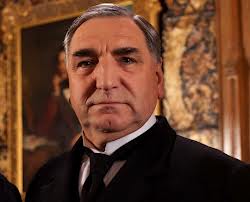
Mr. Carlson is the Butler at Downton.
He is traditional to a fault, loves the old way of doing things,
does not like change
and is absolutely loyal and devoted to the family he serves.

All the male staff report to Mr. Carson.
Mr. Carson is in charge of the pantry, 
the dining room, and the wine cellar.

Mr. Carson has a kind heart but extremely rigorous standards.

I kept seeing Mr. Carson as the wine steward 
in today’s gospel.
That he tastes the water turned to wine
and is so surprised that he goes immediately to Lord Grantham
to point out how unusual this is.

Lord Grantham, sir,
we have an unusual situation here.
This wine...

What is it, Carson?

Well, your Lordship, we usually serve the more inferior wine
once the guests are quite--uh, might I say--tipsy?
But this wine which we are about to put out--

Yes?

Well, Lord Grantham, it is quite excellent.
In fact, quite a bit more excellent a vintage than what we served
the guests when they first arrived.

Lord Grantham trusts Mr. Carson
and values his opinion.

That is true of the steward in John’s gospel today as well.
It is the steward in today’s gospel--
his surprise when he tastes the wine--
that tells us
that something unusual has happened.
We trust him.
We value his opinion.
We know he is telling the truth.

Not only has the water been changed into wine,
the water has been changed into magnificent wine.

Remember? Epiphany is about shining light
onto Jesus being no ordinary human being--
yes, human.
But also, yes, absolutely divine.

The changing of the water into wine
is the first miracle Jesus performs.

We need to think of these moments--
following a star to find a baby in a manger,
the heavens breaking open 
        as Jesus prays right after his baptism,
changing water into wine--
these are “thin place” moments.

Moments when heaven and earth intersect--
right before our eyes.

In John’s gospel they are called “signs”.
The water into wine is the first of Jesus’ signs.

Jesus’ mother is there with him.
She is never named--she is only referred to as his mother.

It’s not surprising that she is there, too.
The tradition of that time
would have been to invite the whole village.
There would not have been a guest list---
everyone was welcome, invited.
And probably--because weddings were usually multi-day feasts,
everyone would have wanted to be there,
to eat, drink, be merry and celebrate.

Running out of wine
would not have been just bad planning 
but a disgrace for the family.
It would have remained an embarrassment for a long long time.
Some might have looked on it as a very bad omen
for the bride and groom and their married life together.
Running out of wine
would have been a disaster.

Jesus’ mother understands this.
She doesn’t tell him WHAT to do
but it is implicit that she wants him to do something
when she tells him they are running out of wine.

Oh, and then that moment when Jesus responds
and calls her “Woman”.

I don’t know about you,
but if I had ever addressed my mother as “Woman”
I don’t know if I would have lived long enough
to be standing here in this pulpit!

Yet that comment to his mother
lets us know quite clearly that Jesus is no longer a child.
He is coming into his own.
It is happening right before our eyes.

His mother also knows he is no longer a child either
and she knows that he is no ordinary person.

She tells the servants to 
“Do whatever he tells you.”

His mother knows.
His mother knows
that Jesus can--and will--do more
than just transform water into wine.

Jesus can transform us.
Jesus can take what is ordinary
and transform that ordinary into extraordinary.

Jesus came to transform the world.
That is our call as well.

There are some Episcopal billboards going up around the country--
we are trying to get some for Western NC too--
they simply say this:

Love God.
Love your neighbor.
Change the world.

Because with love
anything is possible.

Jesus did not change the water into wine to be a show off,
to do a magic trick as entertainment.
He did this because he had compassion, love 
for that family, that bride and groom--for his mother.
Jesus did not want the wedding to be a disaster.
He cared about people.

Yes, the story is here in John’s gospel as a sign,
to show us that Jesus could do anything--and did.

It is also a sign for the future--
another third day will come.
When everything looks hopeless,
resurrection will come.
The time is not yet
but it is sooon.

But now, it’s the season of Epiphany.
Once more we see the Light coming into ordinary life.
Jesus’ mother gives good advice.
Do whatever he tells you.

Do whatever he tells you.

We are called to use our gifts--
and, as we heard in the reading from Paul’s first letter
to the Corinthians,
our gifts are many and they are wonderfully diverse.

We are called  
to use our gifts, to do whatever God calls us to do,
to go wherever God leads us,
and to love all those we meet along the journey.

Love God.
Love your neighbor.
Change the world.

I think even Mr. Carson
would approve of change
when love is at the heart of it.


Tuesday, January 15, 2013

Sermon for Year C Epiphany 1


Washing up for God

I was a teenager
and I was riding with my mother from Raleigh
where we lived
down to Wendell to see my grandparents.
As we drove along old Hwy 64
my mother pointed to a river that ran near the highway.

“Right over there--right at that spot in the river--
that’s where I was baptized.”

She had never pointed that out before 
and she never pointed it out again.

I was too young or too into my own adolescence
to be all that interested that day
or to ask any questions.
I regret that now.
Because I can’t remember the place on the river,
the place where my mother was baptized
and I wish I could.

But what really matters 
is that my mother remembered the place.
She knew the where of her baptism
because it mattered to her.

The place of Jesus’ baptism
obviously was important to the writers of the four gospels.
Matthew, Mark and Luke
all explicitly describe Jesus’ baptism in the Jordan River.

The gospel of John doesn’t describe the baptism 
but refers to it implicitly.

Today we celebrate the Baptism of Christ.
Christ’s baptism in the Jordan River.

Remember, we are in the season of Epiphany
and Epiphany is chock full of events
that shine light upon Jesus’ divinity.
This is no ordinary fellow the scripture keeps telling us.

No ordinary fellow.
So why then did Jesus need to be baptized?
Scholars and ordinary folks have wrestled and theorized
about this question
for centuries.

First a little background information:

The word baptism comes from the Greek word 
which means “washing.”
That’s right--”washing.”

Washing rituals were important.
Not only to the ancient Hebrews
but to many other ancient religions.

The washing of vessels used for food,
the washing of hands before eating,
the ritual washing by women at the end of their monthly cycle.
We read about these washing rituals in scripture
as well as other historical writings.

These washings were not for the purpose of getting physically clean--
they were for the purpose of getting spiritually clean--
preparing body, mind, spirit and all things surrounding
to receive God’s presence, to welcome God’s action.

One of these ritual washings
was used for someone who wanted to convert to Judaism.

At the time when Jesus lived,
there were several different sectarian Jewish communities.
The Pharisees and the Sadduces were essentially city dwellers.
They followed the tradition which said
 if your mother is Jewish, you are Jewish. 
Thus, no ritual washing, no baptism,
was needed for your conversion.

But another one of these groups was the Essenes.
They lived in the desert.
We best know the Essenes as those who authored and saved
what we call the “Dead Sea scrolls”

Some Essenes believed that everyone
needed a ritual washing,
even those who were, by tradition, already Jews.
They felt that the washing, the baptism,
was symbolic of their conversion and purification.

Archaelogical digs at the Essene community near the Dead Sea
have found large pool-shaped depressions
where these ritual baths, these baptisms,
probably occurred.
So you see, 
not everyone was baptized in a river.

Some believe that John the Baptist 
was a member of the Essene community.
Scripture and other writings do not confirm this
nor do they deny this. 
But certainly John lived an ascetic lifestyle like the Essenes
and he lived in the desert.

It is very possible that John was a member 
of this early Christian community 
which called for the baptism of all converts,
for everyone, even those who were born in Judaism.

And this leads us back to the question:
Why did Jesus need baptizing at all?
After all,
his mother was Jewish.
He was not an Essene--
he grew up in Nazareth in Galilee,
not in the Dead Sea area.

Plus if Jesus was the Son of God,
if Jesus was completely without sin
which is what we hear repeatedly throughout the New Testament writing,
why did Jesus need to be baptized?

There are a lot of theories from a diverse variety of scholars--
here are just a few:

THEORY # 1: 

Jesus and John plotted together to do this 
to get attention
for Jesus’ ministry.

Hmmmm...I don’t think I am going to buy this theory.
It sounds a little too much like a 21st century PR campaign
and it just doesn’t ring true to me.

THEORY # 2:

Jesus got baptized to please his mother.

This was suggested in an ancient text 
(the non-canonical Gospel of the Hebrews)
but it wasn’t even accepted by the early church
and isn’t likely to hold water (no pun intended)
even today.

THEORY # 3:

Jesus submitted to baptism 
as a foreshadowing of his death and resurrection---
Now this theory makes more theological sense--
in baptism,
you go under the water (death), 
and you are raised back up again (resurrection). 

This is some of the theology behind full immersion baptism--
but we have no proof that Jesus’ baptism was full immersion.

We believe that was the early tradition
but already by the 3rd century baptism was primarily by pouring
or even just sprinkling with water 
as part of the washing ritual.

The oldest icons of this baptism event 
show Jesus standing in the Jordan River, 
the water barely up to his mid-calf 
and John is pouring water over his head. 
He is not being “dunked.”


THEORY # 4:

Jesus came to represent all of sinful humanity
and his baptism represented the washing away of all sins.

Again, there is theological soundness to this theory,
but the problem with this theory is
John was not primarily baptizing for repentance,
the TURNING AWAY from sin--
yes, that was part of it,
BUT John’s was much more a TURNING TOWARD--
turning toward the coming kingdom of God.

John the Baptizer’s mission was to prepare the way 
for the Messiah to come,
not to just cleanse humanity 
but to get them ready to receive.

So why did Jesus go to be baptized?

Perhaps for much of the same reason
we bring a baby to be baptized 
or we go to be baptized ourselves.

Baptism makes us part of a community--
a community of people who love God
and believe that God loves them.
A community of people 
who commit to trying their hardest 
to love one another, too.
A community of people 
who desires justice and peace 
and respects the dignity 
of every human being.

Through baptism
we are given new birth
by water and the Holy Spirit.

And so was Jesus.
He was given new birth
because his baptism marks the beginning
of his public ministry.

God promised John
the Messiah was coming 
and God gave John some ways to identify Him.

John looked at Jesus
and what he saw was God’s promise fulfilled.
Jesus chose to be baptized
as a confirmation, fulfillment of what God had promised.

Jesus did not go to the Temple to be baptized.
Jesus went to his crazy cousin, this radical preacher John.
Jesus went to the river.
The river Jordan.

The waters of the Jordan River,
just like the waters of the Red Sea in the book of Exodus
represent all that is chaotic, all that can pull us under and drown us.

But chaos does not win.

The Hebrew people make it through the Red Sea
and escape the chaos of oppression.
Joshua leads the Israelites over the Jordan River,
out of the chaos of the wilderness
into the promised land.

Both the names Jesus and Joshua
come from the Hebrew “y’shua”
which means “God saves.”

Jesus’ baptism in the Jordan River 
shows us once more 
that God is with us.

Sometimes the river rages,
threatening to overflow the banks.
Sometimes the river moseys along gently, peacefully.
Just like our lives,
the river is constantly moving, always changing.

But one thing never changes:
The love God has for each one of us.
A love so deep, so immense, so full of light
that it can never be washed away.
Never.
Not ever. 

Feast of St. John Apostle and Evangelist


I admit it.
Sometimes I post out of order.
But I didn't want to leave out this one.

The parish I serve in Asheville is St. John's,
named after the Apostle and Evangelist.
St. John's feast day is December 27th.
Let's face it.
That is not a great day to celebrate a patron saint--
right after multiple Christmas eve services, a Christmas day service
plus folks being out of town
or just worn out from the holidays.

But this year was such an exception.
I did not preach.
Instead, St. John showed up at church
and he preached.
Oh my! Did he ever preach!
With words and without words.

Using a monologue from Katerina Whitley's
magnificent LIGHT TO THE DARKNESS,
St. John walked into the church,
made his way to the pulpit
and had every one of us in the congregation
spell-bound.

Little children, love one another.
That is really the message of St. John.

We deeply felt those words that Sunday morning.
John arrived filled with the Spirit
and Spirit was abundantly shared.

St. John,
come back any time.


Sermon for the Feast of the Epiphany


Celebrating Light

It is definitely on my "bucket list"
to celebrate Epiphany in Tarpon Springs, Florida one year.

Tarpon Springs is on the west coast of Florida,
on the Gulf of Mexico.
It is not a big place--less than 25,000 residents.
Tarpon Springs has the highest percentage
of Greek Americans of any other city in the United States.


Ten thousand people will descend upon 
the little town of Tarpon Springs, Florida this weekend.
Tarpon Springs also has a nickname:
Epiphany City.

This is why so many people will be in town this weekend.
They have a tradition--
also celebrated in Greece--
this will be Tarpon Springs' 107th celebration of Epiphany.

Yes, there is a liturgical side--
there will be multiple church services and many prayers, 
But truly, everything that happens this weekend is liturgy
especially to the Greek Orthodox Christians in Tarpon Springs.
But there is a very special event. The dive.

A priest will bless a small handmade white wooden cross
and then toss it into Spring Bayou,
one of the many bayous that connect into the Gulf at Tarpon Springs.
Then young people between the ages of 16 and 18
will dive into the water--
and yes, even water in Florida in January is COLD--
they will dive and try to recover the cross.

The one who finds the cross first
is said to receive a very special blessing from God.
A blessing that lasts their entire life.
Did you miss that part in Matthew’s gospel today
about diving into cold water to retrieve a small wooden cross?
Probably not.

You see, as Episcopalians,
from the Western Christian tradition,
we celebrate the Feast of Epiphany a little differently.
Epiphany is most familiar to us as a celebration of the magi--
“We three kings of Orient are...”
There they are on the banner that Betty Hayes
created for St. John’s...
“bearing gifts we traverse afar...”


But in the Eastern Christian tradition
the Feast of the Epiphany is the celebration of the baptism of Jesus.
Thus, you can see the connection
between diving into the waters in Tarpon Springs
and coming up with a cross.

Regardless of how we celebrate this feast day,
January 6th, the Feast of the Epiphany,
this day signals the official end of the Christmas season.

The 12 days of Christmas are over.
No more partridges in pear trees,
or ladies dancing 
or drummers drumming.

What are we celebrating on this day?
We are celebrating a revelation.
Jesus is revealed to be not just for the Hebrew people--
but for all people.
The Magi were Gentiles, maybe even pagans.
But even they,
even they knew 
that this Jesus was no ordinary baby.

God has come down to live among us in human form.
There are three events that Christendom attaches to Epiphany--

The first is what we heard in Matthew’s gospel today--
the wise men follow a star and find a miracle.
A baby. The son of God.

The second event is the baptism of Jesus.
Again, and we Episcopalians will celebrate this event next week,
the divinity of Jesus is revealed to the world--
“This is my son...”

And the third event is the changing of the water into wine
at the wedding in Cana,
again showing us that Jesus is no ordinary fellow.
We are going to visit this event in two weeks.

You see today is the FEAST of the Epiphany
but we are about to enter a SEASON of Epiphany,
a season of revelation,
a season of light breaking through the darkness,
a season of coming up from the deep waters into the light.

Christmas is over. Even for us Episcopalians.
We are going to have to go back out into the world--
some of us already have--
back to work, back to school, back to “real life”--
and for some it feels like
going back into darkness--
deadlines and over-scheduled calendars,
complex family dynamics,
separations and loss.
Epiphany calls us to celebrate light--
not just one feast day of light,
but a season--four solid weeks plus a few days
of Epiphany.

Epiphany says, “Well, yes and no.”
Yes, Christmas is over 
but no, we are not plunged back into darkness.

Epiphany says, “There is more than meets the eye.”
Just look at what is being revealed through this baby, Jesus.

Epiphany says, “Follow me.”
The wise magi listened
and people have continued to listen for over 2000 years.

Epiphany says, “God may call us to journey to new places,
to discover new parts of the world.
new parts of ourselves.”

Epiphany says,” We may go home
But by a different way. 
Sometimes plans need to change.

Epiphany is full of surprises.

Epiphany offers us the opportunity to celebrate light. 
We need that.
We especially need that this year.
Hurricane Sandy. 
Sandy Hook Elementary School.
The illnesses and sorrows and deaths
that many of us have had to deal with in our own lives.

We need a time of year,
a liturgical season,
that reminds us
that the Light of the world is right here.
Right here.

We need Epiphany to remind us
to let our little lights shine.
It’s why we chose the hymn we will sing at communion
throughout the season of Epiphany.
This little light of mine
I’m going to let it shine...

T.S. Eliot describes it in his poem
THE JOURNEY OF THE MAGI
begins that poem with these lines:

A cold coming we had of it,
Just the worse time of the year
For a journey, and such a long journy
The ways deep and the weather sharp...

You see, the magi risked the darkness
because they believed in the light,
the light of a star
led them to the light of the world.
I doubt it was an easy journey
but it was a journey they felt was worth taking.

Their kind and compassionate hearts
led them to choose not to return to Herod--
though there likely would have been great financial rewards,
plus prestige and power.
But these wise ones chose 
to go home by another way.

When T. S. Eliot wrote his poem THE JOURNEY OF THE MAGI
he had just converted to Christianity.
Perhaps the poem reflects his own journey
as he moved more deeply into a relationship with God,
with the God he had long doubted even existed.

Light transforms the darkness.
Light transforms us.
Back to Tarpon Springs, Florida.
About ten years ago, the church there noticed
that the Epiphany dive was becoming more of an athletic event
than an opportunity for young people to reflect spiritually 
on baptism and the cross.

The leaders in the church did not want the dive to be about competition.
So now any young person who wants to dive
attends weekly classes
which include writing about their faith.
Attendance at the classes and at church each week
is mandatory. 
Families and the Church and the community 
care about these young people

These young people are asked to reflect 
on five ways they display their love for God each day.
They are asked to name three talents that God has given them 
and how they are using their gifts to serve--
to serve their family, their church, their community, their neighbors.

Epiphany is a good season for all of us to reflect 
on the ways God has brought light into our lives.

Look around.
Look around this church.
Look at all the light.

Look for the light in your life,
in the world.

Epiphany is a good season to reflect 
on what we are doing each day
to bring light into the lives of others.

God blesses each of us with light--
maybe it is only a little light--
but even a little light
        has the power to transform the darkness.

Epiphany calls us to dive deeply
      into the darkness
      in search of the light,
      the Light of the world.